Showing posts with label creativity. Show all posts

Thursday, 24 July 2014

Be super present: a lesson I learned from Joi Ito's @TEDTalk on innovation

ServicefromHeart be super present

In the evening after attending an inspiring talk by Dr Stephen Turner, a physicist-turned-DNA sequencer, who highlighted that the toughest decision (that he has to make over and over again) is just keep going, I am blessed with an opportunity to learn from Joi Ito through his inspiring TED talk.

A self-declared 3x college dropout, Joi highlighted the following lessons:

1. Learning over education. By defining education as what people do to you versus learning as what you do for yourself, it is clear that  learning matters much more than education for your survival and pursuits in creativity, innovation and entrepreneurship.

2. Meta learning is highly important. Learn how to learn.

3. Deploy or die. "You have to get it into the real world to have it actually count."

4. Be connected. Connect ideas, connect inter-disciplinary fields, bridge geographical and cultural boundaries. Connect yourself to the world, connect people and you will be able to innovate valuable things in the process.

5. Be super present. Your future depends on now.

Many thanks
ServicefromHeart
20140724

Tuesday, 24 June 2014

Just keep shipping ~ a secret of creative and productive people

"The reason I've managed a modicum of success is because I just keep shipping." ~ Seth Godin in 99% Conference, 200804

In a broader context, "shipping" here means creating and sending stuff out. You "ship" when you deliver something.

The definition includes when you:
  1. transform your consumption of knowledge into productions of designs, prototypes and masterpieces
  2. file patents
  3. deliver a talk / workshop
  4. sell a (beautiful / useful / innovative) product
  5. send your creative / fiction / scientific manuscript to publisher(s)
  6. perform your (music, singing, dancing) talent into tangible digital pieces
  7. release your work to the world 
  8. debut your latest artwork in a gallery 
  9. startup a company
  10. ... and the list goes on.
Those who ship, after perspiring sweats (and sometimes tears and blood), are admirable. A reason is that shipping, as the final act of execution, happens much less than people expect.

For you who pursue creative endeavors, the requirement to ship is even higher than ever.

To ship with high frequency, you know that you have to overcome some of major emotional barriers in your inner rugged landscape.

The barriers are like high hills and mountains when you are trapped in a valley, or strong currents when you have to move toward the opposite direction. The barriers of insecurity, fear (of failure, imperfection, criticism), inertia (due to procrastination or perfectionism) and resistance will always be there. Sometimes, we forget that we can cross over the barriers, because we are occluded by them.

You, however, have learned strategies to cross over the barriers.

You may have heard of the roles of amygdala, an almond-shaped structure found deep on either side of the brain, that evolved in early vertebrates.

Your amgydala is a wonderful ally. It links sensory (mainly visual and auditory) experience with emotional significance.  The emotionally-arousing memories that are formed and stored in amygdala, include those related to fear. For example, if you see a danger approaching, your amygdala learns about the fear stimulus and  mediate the associated fight-or-flight responses.


Undeniably, fear is an emotion essential for the survival of our ancestors and ourselves. However, we also subconsciously experience fear in situations when this emotion is inappropriate and discouraging creativity and productivity.

Now, you may be tempted to quiet your amygdala.

While it is impossible to live without fear, despite the adage of "have no fear", you can choose to embrace your fear wisely.

Prioritize your fear. If you can allow your fear of being unproductive to rule over your fear of criticism or perfectionism, you will ship more often.

♥♥♥

The first law of thermodynamics states that energy can be converted from one form to another, but that it cannot be created or destroyed. Since all energy forms are (in principle) interconvertible, it is highly possible to convert your fear into positive energy. The process can be effortless, for the experienced creative converters.

The next question is how to convert the fear into positive energy.

Remember that our body, plants and animals are made up of molecules of atoms. When we eat plant- or animal-based meals, the chemical energy present in their molecules is converted into thermal motion, known as heat energy. The heat energy in turn catalyzes reactions inside our cells.

In an analogous way, you can convert your fear into positive energy, by carefully internalizing the (right) fear and selecting the optimum catalysts to harvest its energy. Think of inner strength such as self-control, discipline, and openness to constructive feedback.

♥♥♥

In Feel the Fear and Do It Anyway (which was rejected many, many times in its shipping attempts to the right publisher), Susan Jeffers highlights that "the initial stages are the most difficult and require the greatest concentration."

Be determined enough to leave the port of your comfort zone.

Ship by the end of the hour, the day, and the week.


A step by a step, even if it is just a tiny one, you weather every rack of internal and external storms and thunders.

Remember to sprinkle and drizzle your journey with a little more courage, passion, perseverance, and patience. You are almost there.

"O Captain! My Captain!"

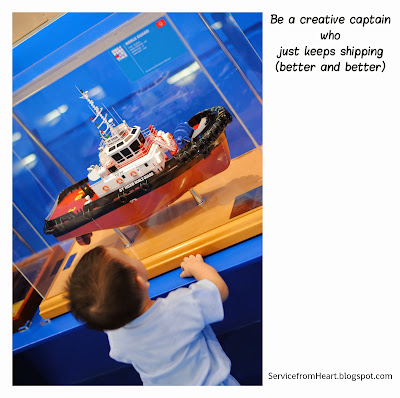
Be a captain of your ships who just keeps shipping (better and better)!

Just keep shipping ~ a secret of creative and productive people ServicefromHeart

Many thanks
ServicefromHeart
20140624

Saturday, 21 June 2014

Interview: Professor Athene Donald on connecting people and interdisciplinary scientific fields

In 2009, I helped a student-run publication to interview and photograph Professor Dame Athene Donald. When I embark on a (lifelong) project to learn about being creative and transforming our creativity into a reality, I strongly feel that her story of connecting her body of work is inspiring courage and creativity in others.

In her office at the legendary Cavendish Laboratory in West Cambridge, she generously shared her insights (some are applicable to life) and hopes for our future creative generations, especially those who are interested in science, technology, engineering, and mathematics (STEM).

♥♥♥
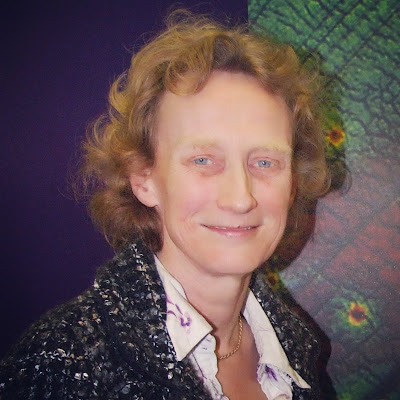
ServicefromHeart interview Professor Dame Athene Donald Cambridge Cavendish Laboratory

In the 800th anniversary year of the University of Cambridge, Professor Athene Donald of the Cavendish Laboratory, has received the 2009 L'Oréal-UNESCO For Women in Science Award. The awards established by the cosmetics company L'Oreal jointly with UNESCO, on the premise that the world needs science ... science needs women, have annually celebrated the achievements of five leading women scientists - one scientist from each continent. Dubbed as the Nobel Prize for Women in Science, the award aims to change the perception of women in science.

Could you please tell us about your scientific contributions which have led to your L'Oréal-UNESCO For Women in Science Award? 

Athene: "I found this a very difficult question, because I think it's a lot of different thing and it's the sum of all that I do. I have had a career where I have worked in lots of different area, and my strength is making connections between different fields.

I have done lots of works in electron microscopy, developed a technique known as environmental scanning electron microscopy (ESEM) for samples which are traditionally very difficult to look at using an ordinary scanning electron microscope, which works in a vacuum.  If you are looking at wet or biological samples, you have to do a lot of sample preparation first. ESEM allows you to look at biological materials without drying them out and killing them.

We have also been looking at how native proteins stick together. When we deliberately denature proteins, they unfold and start to behave like synthetic polymers (plastics), which formed part of my earlier career. We use the ideas of polymer physics and apply them to biological materials.

By moving from traditional physics to non-traditional areas, you open up a lot of new opportunities. One of the things that I am very proud of is that we used Small Angle X¬–ray scattering to study the starch granule. We developed a structural model for how the starch granules are put together, and at one point this was being taught at Part IB Plant Sciences. I thought it was wonderful to be able to bridge into a different discipline!"

How do you nurture inter-disciplinary collaborations? 

Athene: "Within the university, we have a lot of brilliant people. One of the challenges is finding someone to spend some time talking to you to the point that they understand what you are saying and vice versa. Sitting in committees with different people has helped to find new contacts. It takes time to do inter-disciplinary work. A key thing in my inter-disciplinary work is finding people who you like, who share ways of thinking about the world, and who are prepared to commit the necessary time."

Athene is also the director of a newly-established Physics of Medicine Initiative in the University. She continued, "We try to bring physicists, biologists, and clinicians together. The traditional medical physics discipline is aimed at developing techniques, such as MRI and ultrasound, and to apply them in clinics. That's what I would refer to as Medical Physics, and is not what we are doing.

We intend to take a different set of tools to solve biological problems, for example to use lasers to deform cells in order to distinguish healthy from cancerous cells. This is one step back from the clinic, but will give us a profound insight into what is going on. This is rather different from traditional medical physics. It is harder to find clinicians than scientists, who are willing to share what they need with us."

Her secret is to be constantly innovative.

"I have never stayed working in a single area for very long. I always started working in a new area before I drop one. For me, I have never wanted to know absolutely everything about a very small area. I am much more interested in taking a broad approach. It's risky.

Sometimes I am not always successful, but that way you get new ideas and new challenges. I started researching starch in 1986, it went on for 20 years, and now I am not working on it at all.

Knowing when to stop is important. Now, I am working on proteins, cells, and also photovoltaics. My projects tend to have about a ten-year lifespan. We take a technique, start off in a very simple system, and then make it more complex."

How can we attract more female students to pursue science? 

Athene: "The first challenge is in school. Science is not a very popular subject, it seems hard and people don't know what it can be used for in a career.

The second challenge is not to lose women at the later stages, when you are 25 and upwards. You talk to up and coming female researchers, who ask how can I manage to have a family and an academic career?

You don't necessarily get your permanent position until you are in your 30s. There are too many people out there saying you can't do it.

We need to counter that view, and there are many different ways of achieving your goals. If you want to be an academic scientist, it's very hard work, you probably have to give up other things like much of a social life, but it's not impossible."

How do you combine family and work?

Athene shared, "my family is very important to me. My husband is a mathematician, so we can understand each other’s science up to a point. My husband has been fantastically supportive.

As a woman and a scientist, you really need a supportive partner. My husband actually stopped his career, he became the primary carer. Not every couple will find that solution acceptable, you have to find the right solution for you, and that's going to vary for everyone."

On renewable energy, Athene thinks that we need to do a better job in researching on energy, because the world is going to have problems if scientists can't solve that. If we don't solve the energy crisis, we may end up having to go back to living in something like Victorian-time conditions.

In the next ten years, Athene will continue to use microscopy and microrheology (a non-invasive technique to analyze the visco-elastic properties of complex fluids) for understanding particle diffusion in cellular systems.

At the time of this interview (200902), Athene and her collaborators, Viji Draviam at the Department of Genetics in the University of Cambridge, have just begun a project to make patterns on which to stick cells and to investigate on how the patterns affect cell divisions and the implications in cancer.

You may be interested in their 2013 publication on live imaging of the spindle orientation during cell division (mitosis) to determine the function of LGN - a protein that is critical for spindle positioning.

A final take home message : Athene advised that everyone should know that it’s okay to ask questions. Most people need help.

This piece of advice also reminds me on a Chinese idiom 不耻下问, which literally means No Shame To Question. 

Never feel embarrassed to ask and learn.

♥♥♥

Many thanks
ServicefromHeart
201406


Tuesday, 17 June 2014

Overcome the shame of imperfection

Have anyone said "shame on you" to you before?

It does not feel good being reproved, even if you have done something wrong.

When we were younger, that someone can be a person of authority, such as parents, teachers, religious leaders or peers. Their words might made a permanent imprint in our mind.

As a grown-up, that someone can also be your inner judge, whom you may NOT aware well. The judge learn the laws through your years of experiences and past interactions with others.

To overcome shame, we must first understand shame and its relationship with guilt.

Could you please tell me the difference between shame and guilt?
In shame, we feel that we are bad.
In guilt, we feel that we have done something bad.

In my perspective, if a child makes a mistake, it is better for him to feel sorry for his inappropriate action than to feel ashamed of himself. What's your view?

In Spiritual Capital, Danah Zohar rated both shame and guilt -7 in a scale of motivation from -8 to +8, which corresponds to negative and positive motivations, emotions and drives that propel our lives and actions.

She defines shame as having no right to be here.

For individuals, both shame and guilt are more discouraging than fear (-4), craving / greed (-3), and anger (-2).

When we experience shame and guilt, it is extremely hard to listen to our inner voices, to be creative and create something out of passion.

There are many forms of shame. An extreme one is the shame of existing. Other forms include the shame of addiction, shame of illness such as cancers and diabetes.

The Confucian virtues include shame. While other Confucian virtues of loyalty, filial piety, benevolence, love, harmony, courtesy and integrity appear to be positive motivators, the (lost-in-translation) shame that Confucius referred to is the judgement and the sense of right and wrong.

Sadly, many times we feel ashamed because we are not good enough in our life, work, study, look, sport, and the list goes on. We need more courage to ignore this form of shame -- the shame of imperfection.

To overcome fear (-4) or a sense of being threatened or too vulnerable, one has to first overcome shame and guilt (-7).
"We all have shame. We all have good and bad, dark and light, inside of us. But if we don't come to terms with our shame, our struggles, we start believing that there's something wrong with us -- that we're bad, flawed, not good enough -- and even worse, we start acting on those beliefs. If we want to be fully engaged, to be connected, we have to be vulnerable. In order to be vulnerable, we need to develop resilience to shame." ~ Daring Greatly: How the Courage to Be Vulnerable Transforms the Way We Live, Love, Parent, and Lead by Brené Brown of University of Houston Graduate College of Social Work
Sometimes, we may experience shame because we do not fit in. We do not always fit in to the ideals expected and determined by others (parents, teachers, bosses, society or media).

The good news is we can learn to be aware of the difference between fitting in and belonging, both concepts are often thought as being synonymous but they can be quite different and have significant influences on our choices, emotions and well-beings. Having such an awareness helps us to develop resilience to shame.

Could you please tell me the difference between fitting in and belonging?
To fit in, one assesses a situation and changes to be accepted (by others).
To belong means just be yourself, accept yourself and you will be accepted (by others who really care about you).

"The shaming culture we live in makes it harder than ever to show courage and be vulnerable" but if a person starts overcoming shame, he or she can have a viral effect to people whom he or she influences.

For example, as a big sister I would like my sister to love her healthy body (she used to idealize the very slim figures of models) and as an aunt I would love my niece Michelle to love her hair (ignore some people who said she has too little hair to grow long hair).

Instead of telling them or nagging to love their bodies and looks - the gifts that God and nature have bestowed to them, I choose to be a positive role model, a servant leader by loving my body, look, style and appearance. I am grateful for every cell, organ, part and feature of my face and body.

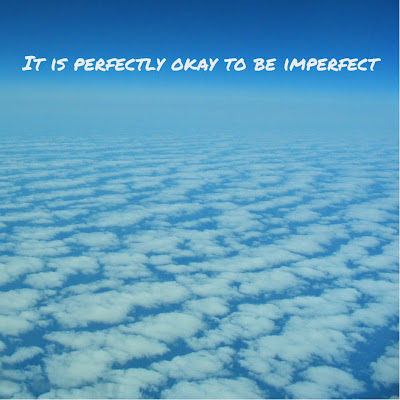
Let us learn from the nature. The clouds are not perfect yet they are beautiful. It is perfectly okay to be imperfect. No more shame, but more courage to be imperfect.

ServicefromHeart overcome shame of imperfection

With love,
ServicefromHeart
20140617

Friday, 16 May 2014

Postcards from Marina Bay Sands, Singapore

Thanks to MRT Downtown Line (coded in blue), the first visit of baby Ren to Marina Bay Sands (MBS / 滨海湾金沙) was a realization. Except for the transport fare, the visit to The Shoppes (shopping mall) in MBS - the world's most expensive building at US$ 5.5 - 5.7 billion (as of 2010) - is free.

“Everyday is a journey in our lives, and an MRT ride can be an interesting journey.”

每天是一个旅程;乘坐地铁可以是一个有趣的旅程!

Travel Journal to world most expensive building Marina Bay Sands Singapore by ServicefromHeart

Spacious seats of MRT serving Downtown Line make us happy! Thank you MRT.

Travel Journal to world most expensive building Marina Bay Sands Singapore by ServicefromHeart 

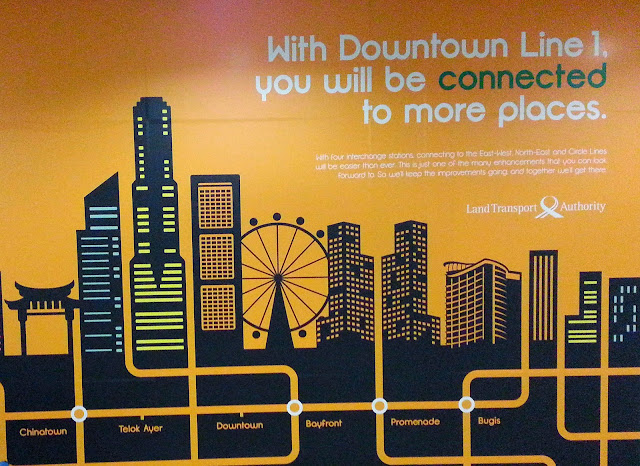
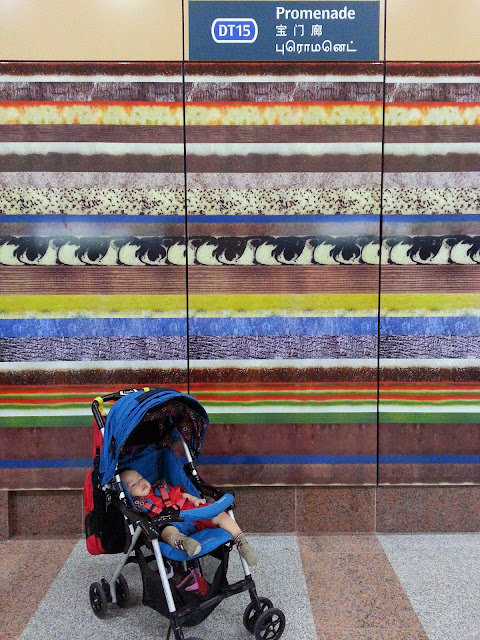
We took the MRT Downtown Line from Bugis via Promenade to Bayfront station.

Travel Journal to world most expensive building Marina Bay Sands Singapore by ServicefromHeart

♥ ♥ ♥

Designed by Moshe Safdie (an Israeli/Canadian architect) with an inspiration from card decks, MBS is a unique icon of Singapore. "Does it look like ancestral tablets (tombstones)?" a taxi driver once asked me. To me, it looks like an ancient Chinese scholar's hat (古老的中国学者的帽子).

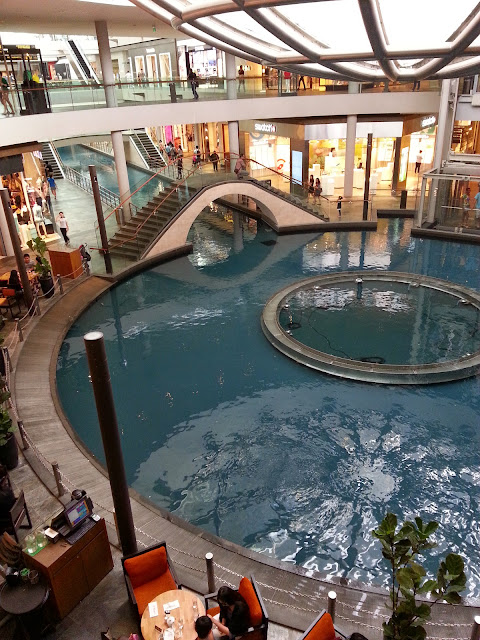
A canal inside the Marina Bay Sands reminds us on the Venice (Italy) and River Cambridge (England).

 Travel Journal to world most expensive building Marina Bay Sands Singapore by ServicefromHeart

A tea break by the water side beneath the Rain Oculus created by Ned Kahn - famous for transforming an invisible aspect of nature into visible, is pleasing and relaxing. That day, I had a snack leftover that I bought from near Lavender MRT station whereas baby Ren had grape cuts and a bottle of breast milk.

Travel Journal to world most expensive building Marina Bay Sands Singapore by ServicefromHeart

♥ ♥ ♥

Luxurious brands ... offer a pleasant opportunity for window shopping! They are sources of inspirations: the creative designs (创意设计), the careful attention to details (精心细节) and exquisite craftsmanship (精湛的工艺).

Dior 

Travel Journal to world most expensive building Marina Bay Sands Singapore by ServicefromHeart

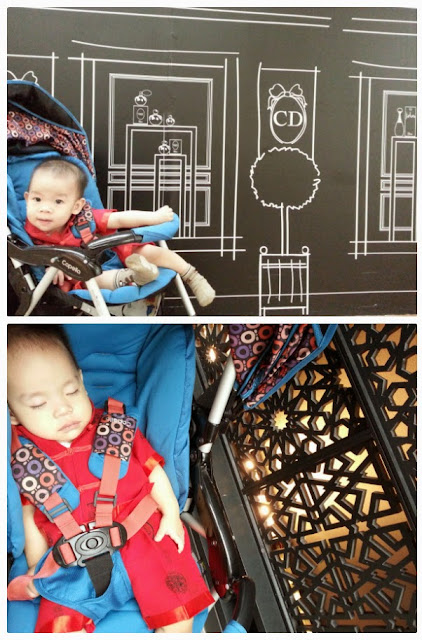
A different kind of worlds ... 

Travel Journal to world most expensive building Marina Bay Sands Singapore by ServicefromHeart

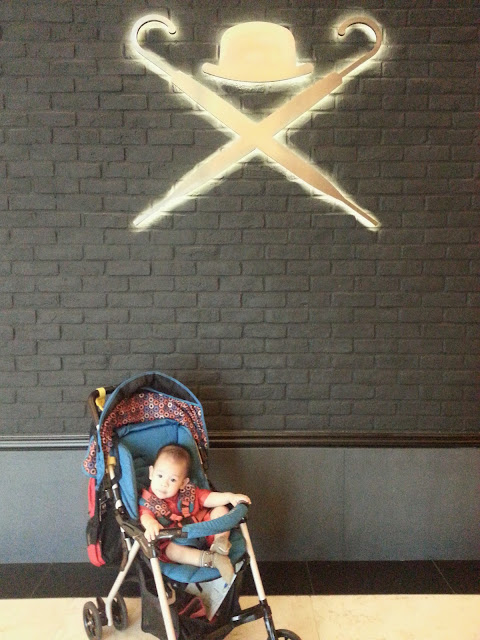
Are you interested to hire baby Ren as your little model?

Travel Journal to world most expensive building Marina Bay Sands Singapore by ServicefromHeart

♥ ♥ ♥

I remember ...

When baby Ren was in my belly, my maternal grandmother, Dad, Mom and I had a memorable early dinner at Ding Tai Fung (鼎泰豐), Marina Bay Sands. It was a good decision so that we did not have to queue for a table. I did not feel significantly inflated prices as compared to other outlets of Ding Tai Fung, given the posh location.

My family encouraged me to eat more xiaolongbao (小笼包) - my favorite dish. I also like the chilli oil dumplings.

Xiaolongbao was originally from Shanghai and Wuxi, China. Their mini sizes made them so delicate and cherishable to savor.

It is not only about the food, but also the people whom you dine with and the people who transform our food into food art.

“I choose to collect memories instead of things.” ~ Elena Levon

我选择收集回忆,而不是东西。

♥ ♥ ♥

What's next?
1. visit Sands SkyPark that connects the 2 hotel towers and is large enough (1.2 hectare) to park four-and-a-half Airbus A380 jumbo jets. Plan your visit at the end of the afternoon before dusk to enjoy the view during daytime and at night. It costs a visitor SG$23 to get to the Skypark by high speed elevator of the middle tower. The ticketing office is not accessible by lift, and a friendly staff kindly offered to carry my pram / stroller, but in the end I decided to visit Sands SkyPark next time.
2. Alternatively, you can take the free elevator (Tower 3) to Ku DÉ Ta Lounge to enjoy some drinks and scenery of Singapore's cityscape and skyline. PS: casual dress is not allowed, no shorts, slippers, singlets and tank tops plese.
3. swim @ The Infinite Pool on the 57th floor - the largest elevated pool in the world, which is only accessible to the hotel guests.
4. watch Wonder Full: Light Show and Water Show. Each show starts daily at 8pm and 9.30pm. On Friday and Saturday nights, there is another show at 11pm.
To watch the Water Show, be at the Marina Bay Sands side.
To watch the Light Show, cross the Bay.
Please remember to bring your tripod for taking blur-free photography / video.

Address: 10 Bayfront Ave Marina Bay Sands, Singapore 018956


View Larger Map


Other travel posts that I love:
♥ Ku De Ta by Journeys of the Fabulist
♥ SkyPark Infinity Pool by Escape with Style
♥ Light and Water Show by Rosie and Edmund Tay
♥ our #travelxp posts

With love,
ServicefromHeart
2014