Showing posts with label noodles. Show all posts

Wednesday, 16 April 2014

N for noodle for #AtoZChallenge: quick-to-cook noodles for breakfast

Since Dear has to go to work in early mornings, our favorite noodles are those that are quick-to-cook, but not instant noodles - which were originally invented by Momofuku Ando (吴百福) of Nissin Foods in Japan.

quick-to-cook noodles for breakfast by ServicefromHeart

For #AtoZChallenge on 2014 April 16 Wed, I lovingly introduce 3 favorite quick-to-cook noodles:
♥ misua
♥ kway teow  
♥ udon

♥♥♥

Misua, also known as mee sua / 面线, is a variety of dried salted Chinese noodles that cooks in less than 2 minutes in boiling water. 

A symbol of longevity in Chinese culture, misua - a thin wheat flour noodle, is a humble breakfast for a birthday celebration.

How is about a whole wheat misua for a quick yet filling breakfast?

quick-to-cook noodles misua for breakfast by ServicefromHeart

♥♥♥

Kway teow /  粿条 is a flat rice noodle that is commonly used for stir-frying, affectionately known as char kway teow / stir-fried kway teow in Malaysia, Singapore, and Indonesia.

We also love to cook a soup using chilled kway teow for breakfast, it is ready in less than 2 minutes!
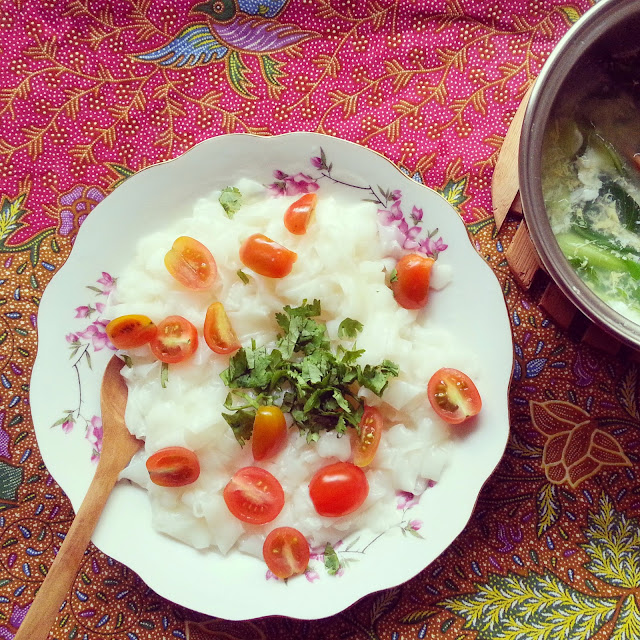
quick-to-cook noodles for breakfast by ServicefromHeart

♥♥♥

Udon / うどん / 烏冬 is thick wheat flour noodle in Japanese cuisine, that is often served in kakejiru broth with tempura. 

I also love stir-fried udon in soy-based sauce, known as yaki-udon.

How is about a plate of no-fry udon with vegetable soup? Enjoy its recipe & the udon!

I buy chilled udon without any pre-packed seasoning, as a homemade seasoning of sesame oil, honey, vinegar, finely chopped fresh cilantro can be easily made.

Add some quick-to-cook vegetables such as celery or bok choy. 
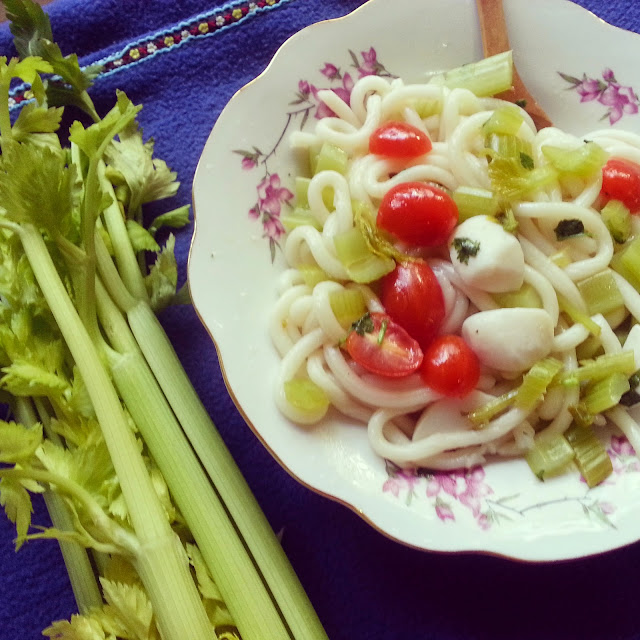
quick-to-cook noodles for breakfast by ServicefromHeart udon

Soup / juice / extract from steaming fish can be used as a seasoning for udon or some other types of noodles. Keep the soup in fridge for the next day / morning use. Without the need to warm the cold soup, add in hot boiled noodles and stir immediately.
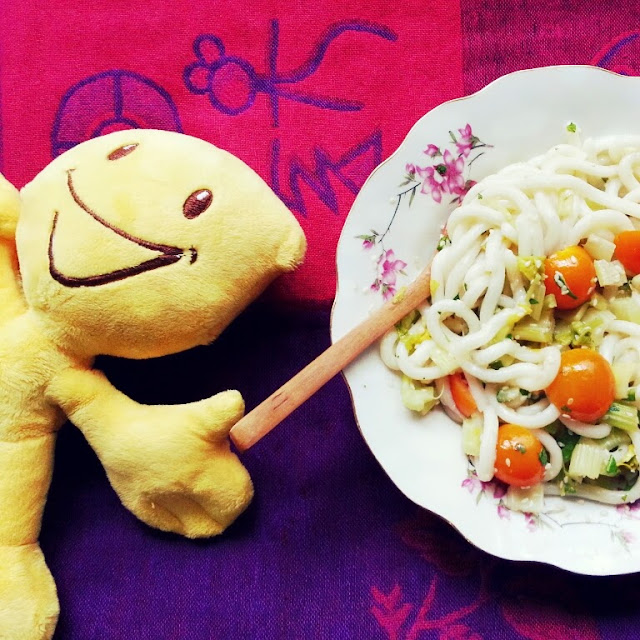
quick-to-cook noodles for breakfast by ServicefromHeart udon

The water used to boil noodles can be used for hard-boiled egg to save gas / electricity for us.

Directions:
1. Once noodles are cooked, immediately drain the boiling water into a bowl containing a fresh egg. The temperature of the boiling water matters, it has to be high.
2. Cover the bowl to let the egg sits for at least 10 minutes*.
3. Serve the half-boiled egg with a dash of soy sauce and a pinch of freshly ground pepper.

* I prefer my egg to be more cooked but not fully cooked. 

Other recipes that I love:
♥ misua meat ball, known as almondigas / bola-bola in Philippines; bola means ball in Bahasa Indonesia. How is about trying a MSG-free version of misua meat ball @ Mga Luto Ni Lola (My Grandma's Recipes) by GJ Coleco?
♥ Singapore-style half-boiled egg by Jason Ng @ Feast To The World

Check also our other #5minutemeal recipes.

Follow my blog with Bloglovin ♥

With love,
ServicefromHeart
20140416


Sunday, 2 March 2014

gratitude soup stock recipe 感恩高汤

Soup stock is not only tasty and nutritious to cook / boil soup, but also versatile to prepare other dishes, from stews, savory steamed rice, stir-fried / sauteed vegetables to noodle meals.

gratitude soup stock recipe by ServicefromHeart

I call this soup stock gratitude soup stock (感恩高汤) because it is supposed to contain rich nutrients from the sky, the land and the sea. We are grateful for all goodness that are bestowed to us.

Ingredients:
♥ 2 kg bones (骨头) and meat (肉), washed & cut into pieces
♥ 200g dried mushroom (干香菇), washed, soaked, drained
♥ 120g red dates (红枣), pitted & soaked
♥ 5 honey dates (蜜枣), washed (optional)
♥ 50g dried scallops (干贝), soaked
♥ 2 tbsp anchovies, washed
♥ 5 cloves garlic (大蒜)
♥ 1/2 small knob (10g) ginger (姜)
♥ 1 tsp white pepper powder (白胡椒粉)
♥ 2 liters water (过滤水), filtered if possible

Directions:
1. Blanch bones and meats in boiling water for ~5 minutes. Drain and wash. 
2. Boil 2 liters water in a big pot / slow cooker. Add all ingredients. Boil for a minimum of 5 hours using low heat.
3. Remove oil on the surface of the stock using a ladle (optional)*.
4. Sieve the stock from the ingredients. Pour stock into freezable containers**. Use some immediately, they are the freshest!
5. Store in a freezer after the stock cool down to room temperature.


* If you choose to keep the fat, it will float to the top layer in a refrigerator / freezer. An option is to use the fat for stir-frying.

Since I am going to store the soup stock, I am not using other ingredients that also make soups delicious, such as onion, green onion / spring onion / scallion, carrot, celery, pumpkin, sweet potato.

** I use Avent breast milk containers that fit into baby bottles warmer. The small cups are ideal for me because I am cooking in relatively small portions. Faster to thaw!


Alternatively to store stock in a freezer, Zhen suggests to use Zebra stainless steel tingkat / rantang / dabbas / safartas (tiffin carriers) that are commonly used as lunch boxes. You can reheat food in tiffin on the stove top or using an open flame.

Important note: Do not put your tiffin in a microwave because metal should not be microwaved.


Tips:
♥ If you like salty taste in your soup, add salt only at later stage of boiling soup so that nutrients can dissolve in the soup faster at early stage.

如果你喜欢咸的味道,煮汤时,别太快加盐,使营养物质可以在汤里快溶解。

♥ While boiling soup or soup stock, do not keep opening the cover of pot. This is to ensure that heat, fragrance and aroma stay and circulate well in the pot.

当煮汤或高汤,不要继续打开锅的盖子。这是为了确定热和香味逗留并在锅内循环良好。

♥ While boiling soup or soup stock, do not add room-temperature water. This is to prevent the nutrients (e.g. proteins) of the meat from solidifying.

当煮汤或高汤,不添加室温水。这是为了防止肉的营养成分(如蛋白质)再次凝固。

♥ Consume also the edible ingredients used for boiling soup. This is because not all nutrients of the ingredients will be dissolved completely in the soup regardless of the hours of boiling soups.

♥ Use frozen soup stock by 1 week to ensure freshness.

使用冷冻高汤1周内以确保新鲜。 


Other posts that I love:
♥ Lesh Karan's amaranth vegetable soup recipe @ The Mindful Foodie
♥ Shu Han Lee's Vietnamese fish stock @ Mummy I can cook
♥ Kathleen's chicken stock recipe @ Providence Farms
♥ Tiffin Time! Classic Stacked Lunch-Pails by Shahan Cheong

Check also our other #5minutemeal recipes.

With love,
ServicefromHeart
20140302

Tuesday, 18 February 2014

No-fry udon with vegetable soup recipe by ServicefromHeart

We love udon meals, especially on cold nights. Hot udon soup reminds me on Lunar New Year's steamboat in simplified form. Although udon (うどん) -- thick wheat floor noodle -- originates from Japan, I used Made in Korea udon for this recipe, simply because the brand was on promotion at NTUC Fairprice today.

udon vegetables ServicefromHeart recipe

Udon has soft, slight chewy texture and slight salty taste. In term of diameter, udon is thicker than thick rice noodle (粗米粉) commonly used for laksa in Singapore. Udon is also similar to pici / pinci, which is fat spaghetti originating from Sienna, Tuscany, Italy.

We prefer to have our no-fry udon in dried form to soup-based one, with a bowl of hot soup rich in ingredients as a companion. This preference is because dried seasoned udon is more fragrant and less scalding than the soup-based one, especially for toddlers' relatively sensitive tongues.

Udon soups are often served with delicious crispy tempura or fried tofu, but tonight I am preparing no fried meal. This recipe is a good choice when we or a family member suffers from sore throats, cough (please pray me to recover quickly from cough that has waken me up at nights), or flu.

Servings: 1 adult + 1 child
Preparation and cooking time: 20 minutes*

* You can do faster because I took my own sweet time, and wash some utensils in between preparation.

Ingredients:
♥ 1 packet fresh udon noodles (乌冬面)
♥ 1 cup lettuce (生菜)
♥ 1 cup baby spinach (菠菜)
♥ 1 cup green bok choy (小白菜)
♥ 1 tomato (番茄), quartered
♥ 1 egg (鸡蛋)
♥ 3 imitation crab meat sticks (kepiting imitasi), cut into inches long
♥ 1 tbsp anchovies (ikan teri)
♥ 1 tsp sesame oil (麻油)
♥ 1 tbsp honey (madu)
♥ 1 tbsp fresh cilantro / coriander (daun ketumbar), finely chopped
♥ 1 clove garlic (bawang putih), pressed

Directions
:
1. Boil water with anchovies to let flavor out.
2. Meanwhile, wash vegetables thoroughly.
3. Add tomatoes, crab sticks, and later vegetables to boiling water.
4. After vegetables are cooked, add egg to soup and quickly stir to obtain soft tofu-like texture for 1 minute.
5. Pour soup into bowls.
6. Boil water to cook udon for 2 minutes or until the noodles are separated.
7. Meanwhile, make seasoning by mixing sesame oil, honey, cilantro and garlic.
8. Drain cooked udon noodles and coat them with seasoning by gently tossing them.

Tips:
♥ Use pre-made soup stock (if any) to replace water for soup.
♥ For variations, substitute anchovies with miso (fermented soy bean paste). Jaden Hair at Steamy Kitchen shared that to dissolve miso, whisk it in a separate bowl with parts of hot soup before adding the mixture back to saucepan. Directly adding undissolved miso to saucepan may cause the miso to turn gritty. However, Marc Matsumoto at No Recipes appears to disagree with this. For me, I simply try whatever methods that work.

Other recipes that I love:
♥ Namiko Chen's kitsune udon with aburaage** at Just One Cookbook
♥ Bon Appétit Test Kitchen's udon noodle soup with vegetables
♥ Katie's veggie miso udon soup at Produce on Parade 

** Aburaage (deep-fried tofu) sweetly reminds me on tau pok (fried tofu) of Singapore, a favorite food of baby Ren's Dad.

For faster-to-prepare recipes, consider our #5minutemeal recipes.

With love,
ServicefromHeart
20140218